


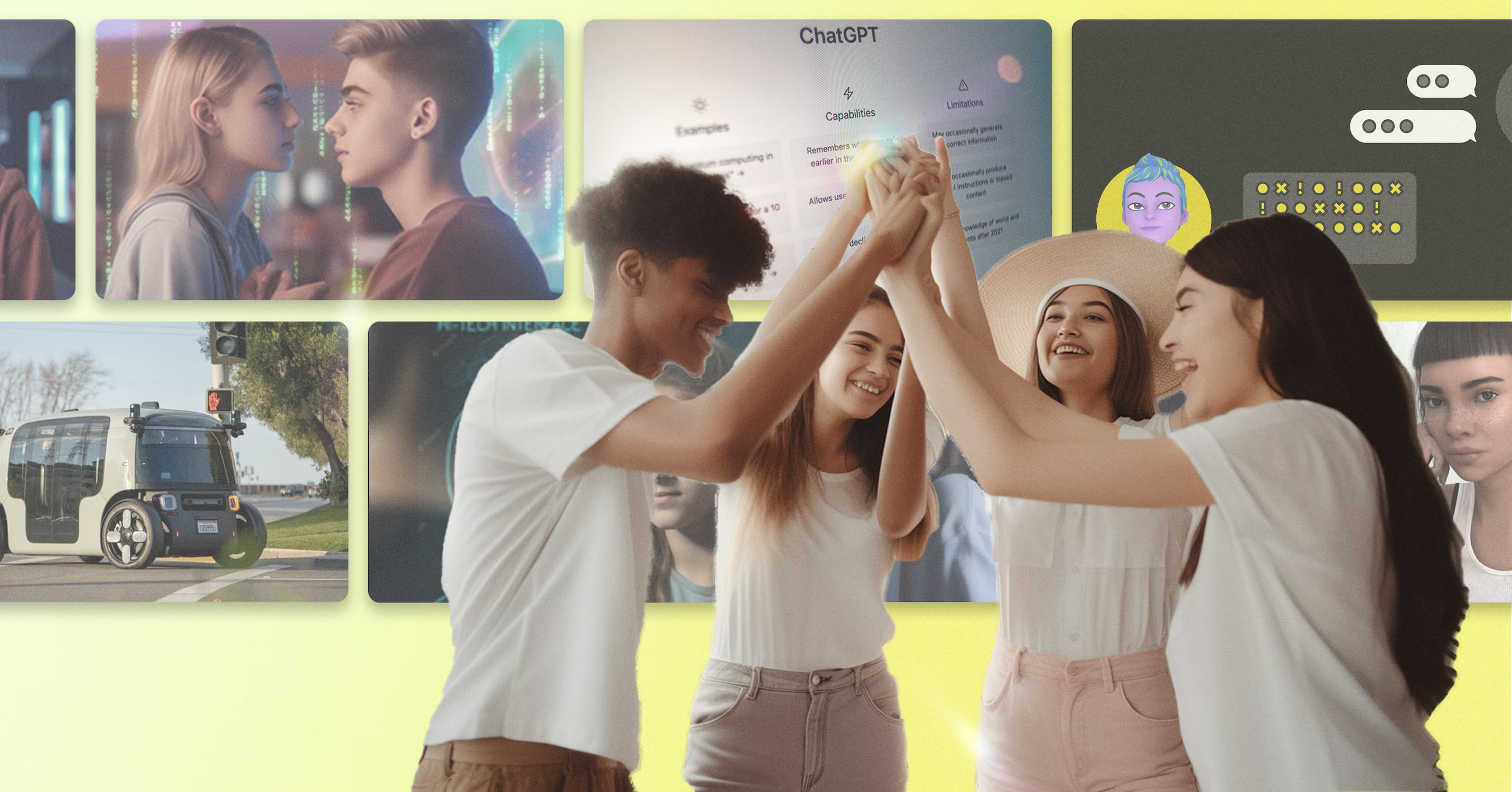
Earlier this year, Snapchat introduced My AI, a relentlessly cheerful chatbot powered by OpenAI’s GPT technology. The avatar, pinned to the top of your chat feed, was ready to respond to every passing thought, be your 24/7 rant buddy, or even…your new best friend.
You might imagine that Gen Z, cradled by the arms of technology from their earliest friendships found on Club Penguin or Minecraft, would welcome My AI. After all, this is a generation for whom dating starts with the subtle “like” of a post or in the DMs of a swiped-up Instagram story.
But in a surprising twist, Snap’s chatbot was an instant flop, resulting in a spike of 1-star reviews.
That tracks with the responses of the 13- to 21-year-olds we spoke to, all of whom voiced a resounding “no” to the idea of AI infringing upon their relationships. Rather than forming attachments to the programmed responses of AI, they are interested in cultivating genuine bonds with others that don’t require an algorithmic intermediary.
“How does this change our expectations of real life people?” asked one 19-year-old. “I feel like that could be super problematic for friendships because you're like, oh, I just want this person to be different. Why can't they talk like this? Why do they laugh like this? Why can't they understand this? Why don't they know everything about me? Why can't they read my mind?”
Young people already feel the damage social media has had on their relationships and mental health. And they're wary that AI will interfere with the relationships they’re just learning to foster.