


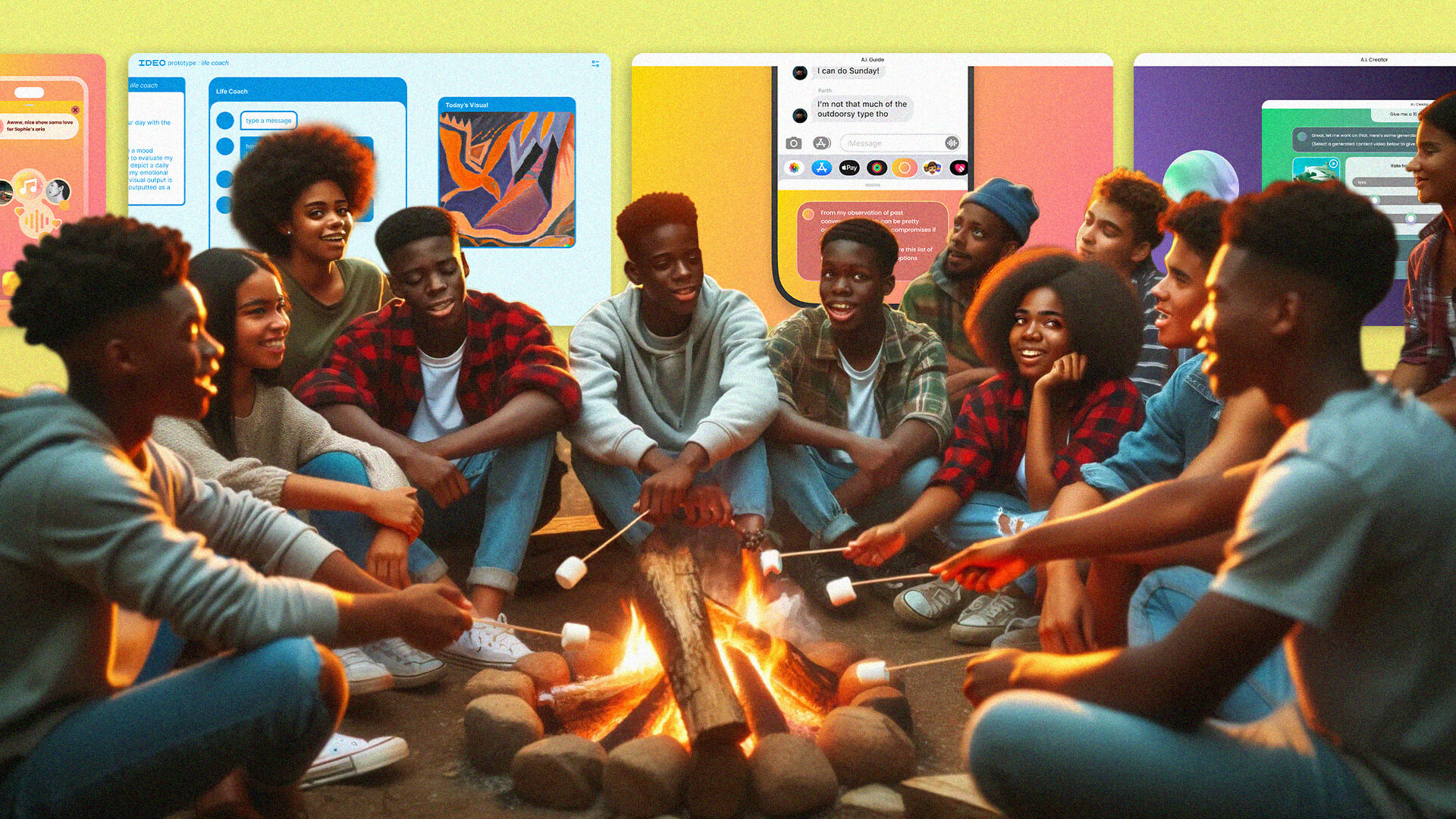
These are also the kinds of spaces where AI is appearing in the form of new tools and personal assistants. But having AI show up on platforms Gen Z considers safe spaces can be problematic.
In the first phase of our research testing the edges of AI products with a group of Gen Zs, they laid out three principles to help guide us in our designs: Skip the engineered reality; elevate human intuition and empathy; and build in transparency. This time around, we made those principles tangible, by prototyping various expressions of AI personal assistants, and asking our Gen Z partners to test them out in the context of their own lives.
We were also testing a hypothesis of our own, based on our work with this cohort: For users to feel they have the freedom to play and engage with AI, we first need to design a strong foundation of psychological safety. We believe that’s key to unlocking social AI experiences that Gen Z will truly want to use.