


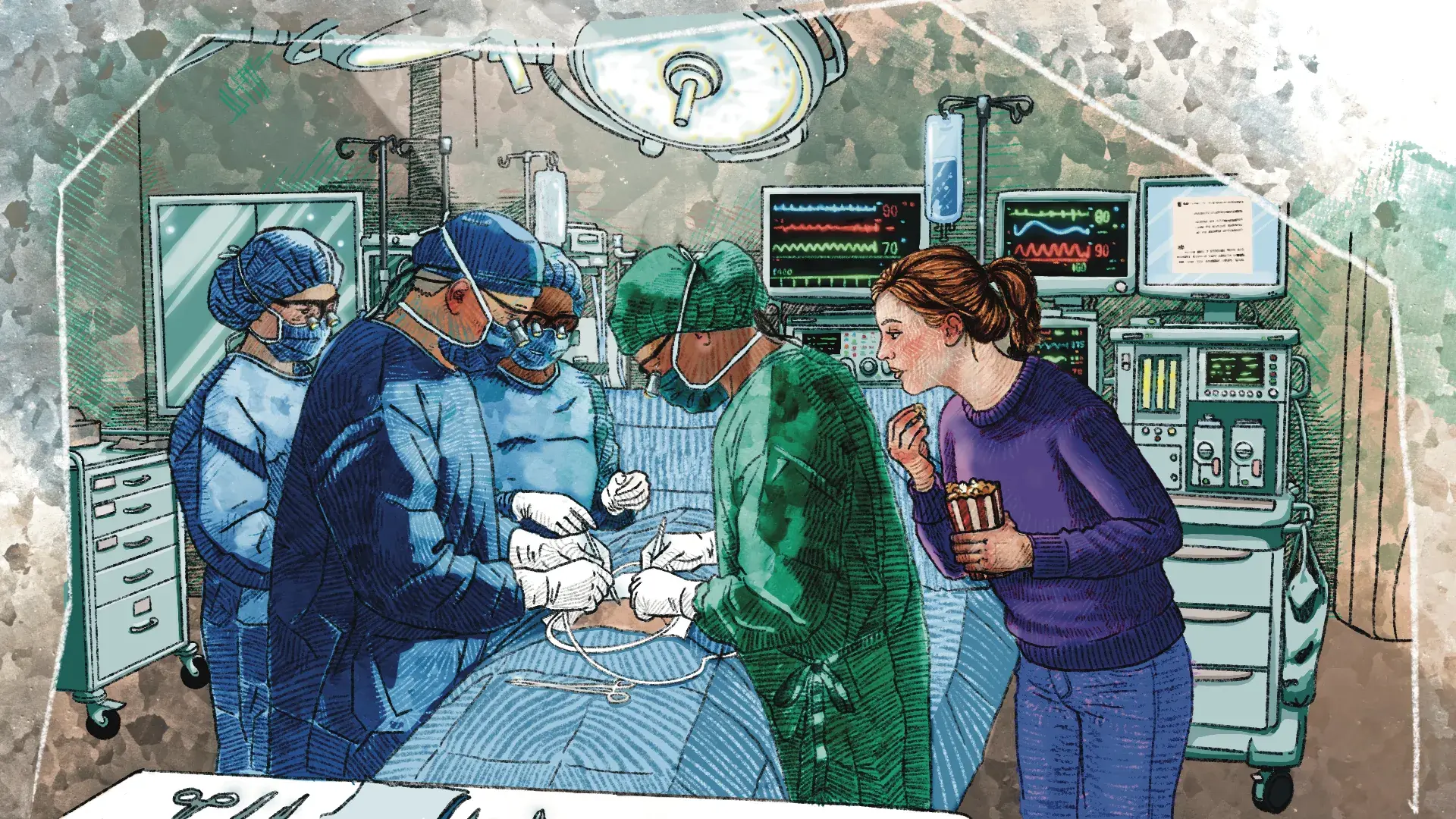
“The best teachers I’ve observed share one hard-earned skill: they show restraint, letting learners grapple and find their feet with just the right amount of support.”
I’ve never been a big fan of medical dramas, but I couldn’t stop watching The Pitt, the HBO Max show about a fictional Pittsburgh ER at a public teaching hospital. The high-stakes medical cases, relentless pace, and scrappy, sleep-deprived team you can’t help but root for had millions of viewers counting down to Thursday nights earlier this year. But for me, it was about watching the work itself.
Apparently, I’m not alone. The Washington Post called the Emmy-winning show “perhaps the purest example of ‘competency porn’ on TV”—a term that surged into the cultural vocabulary this year to name the satisfaction of watching people who are really, really good at their jobs.
But what they’re really good at goes beyond the practice of medicine. They excel at teaching and learning on the job. They think out loud, trust learners with calls that matter, and dissect what just happened before moving on to what’s next. I find it inspiring to watch.
Here are three lessons on teaching and learning in the workplace that we can take from The Pitt, and ways to activate them in your own work.
Make mastery observable
Every scene on The Pitt has two things going on: someone doing the work, and someone learning to do the work. A recent nursing school grad shadows as the charge nurse guides a survivor through a rape kit exam—every choice a lesson in how to move at the patient’s pace. A resident observes as the attending decides out loud whether a procedure is worth trying if it might cost their patient her sight. A specialist performs an emergency procedure the attending has never seen before, teaching the room as she does it. Watching people at the top of their game work out a problem from beginning to end—including the messy middle, not just the outcome—is a sight to behold.
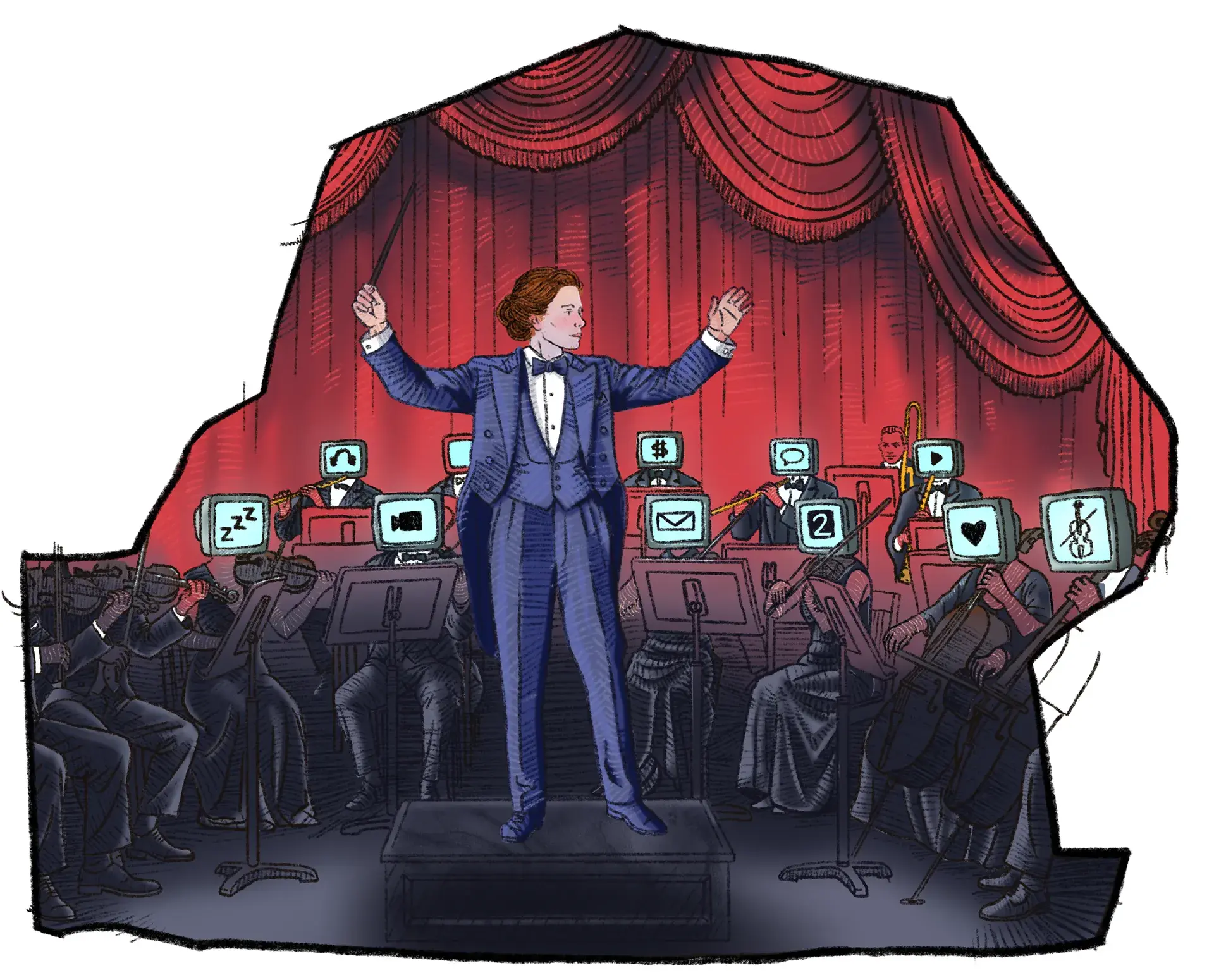
Most of us don’t work in a teaching hospital, but “see one, do one, teach one”—the century-old learning model attributed to Johns Hopkins co-founder and surgeon William Stewart Halsted—is how most of us pick up a craft, medical or otherwise. But that kind of learning is harder to come by these days. For years, most knowledge work has been evolving to a less readily observable state. Increased remote work makes it challenging to know what other people are working on, receive mentorship, get feedback from peers, or signal when you need help. The explosion of single-player AI tools has increased output, but made the thinking that informed it harder to see and, some research suggests, to trust.
When my San Francisco colleague Thomas Overthun worked at Philips early in his career, he would pass by hundreds of drawing boards on his way out of the studio, displaying an amazing range of work in progress. Our workplaces look very different now, but it’s entirely possible to design tools, rituals, and ways of working that can help us see and get inspired by one another’s in-process work.
Here are a few practices that are helping us tilt our work toward each other:
- Use video shares: Kaii Tu in our Shanghai studio records short Loom videos to walk his team through the design choices he made—and why. The format forces him to make his reasoning legible, and makes it possible to share across time zones.
- Host “Screen Share Fridays”: On Fridays at our Cambridge studio, the studio-wide Slack channel explodes with screenshots of work in progress, sketches, project Post-it Notes, photography from the field, and presentation decks. Questions naturally follow, which then leads to dialogue about the work.
- Think in public: My Chicago colleague Leah Marcus builds incredible FigJam boards at the start of each project with relevant research, inspiration, and connections she’s making across our digital product portfolio. She uses plain language, bringing others who don’t share her business design discipline into her thinking.
Let the learner try
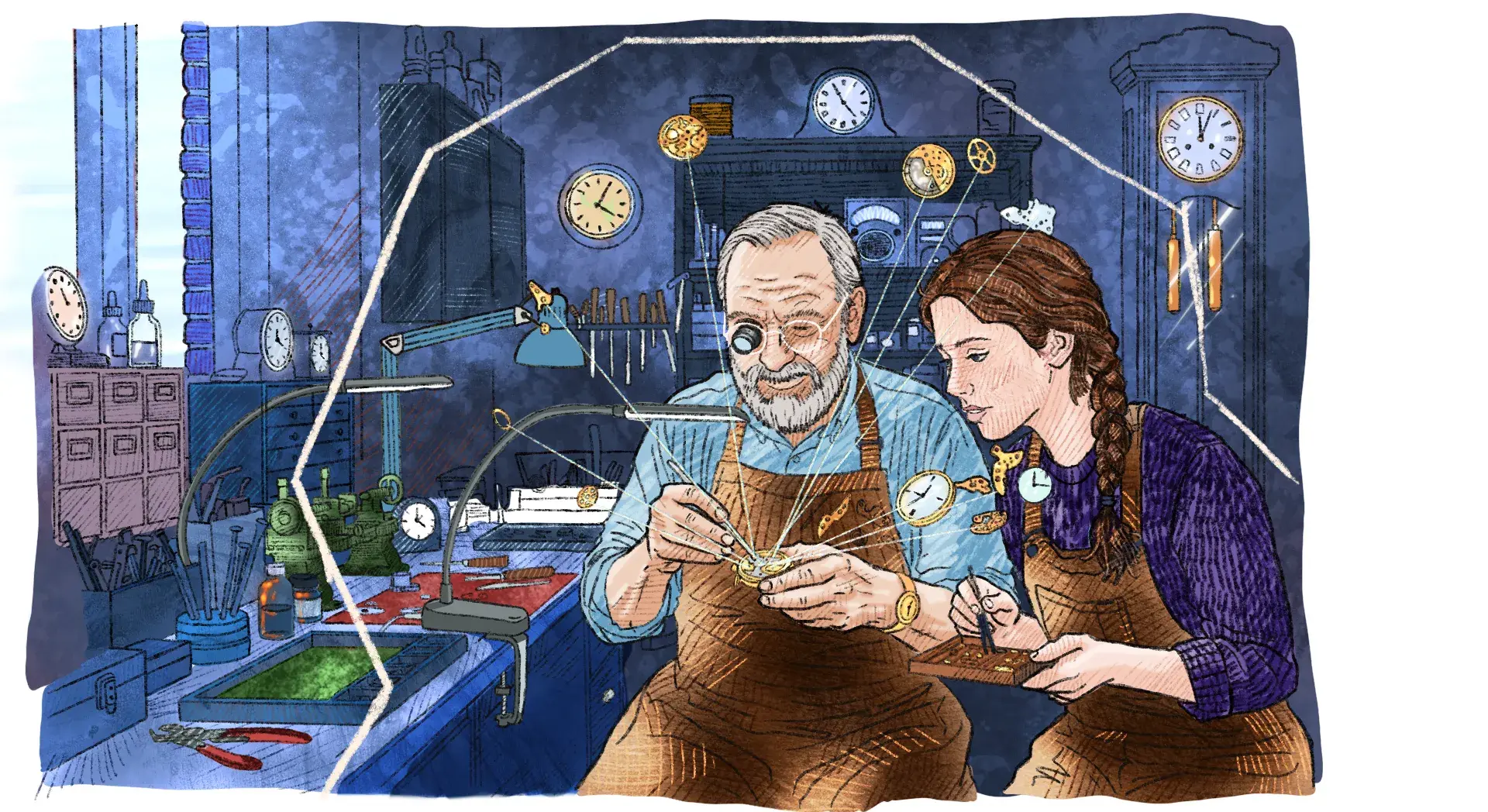
The best teachers I’ve observed share one hard-earned skill: they show restraint, letting learners grapple and find their feet with just the right amount of support. In The Pitt, when a new patient arrives in critical condition, the attending physician, Dr. Robby, turns to a resident and asks, “What’s your plan?” He doesn’t jump in, even when the clock is ticking. As a viewer, you feel the pressure that the resident is under and wonder, “Is he trusting a beginner with too much?” Turns out, this is an important part of the learning process.
This is the “do one” part of Halsted’s model, and it’s harder than it sounds. We know from decades of research that learning happens when we reach the edges of what we know how to do, and it happens even faster with scaffolding: a gradual release of responsibility from teacher to student. Instead of just telling residents to do the procedure on their own, Dr. Robby asks them questions, nudges them to consider alternatives, and fills in information they miss if it will have consequences for the patient. He lets them try first, then steps in when they get stuck. The scaffolding makes the risk survivable but not invisible.
As a firstborn, Virgo, recovering perfectionist, I’ll be the first to admit that it is hard to use suggesting mode when you can just use editing mode. But the shortcut has real implications for my colleagues and the work. While I may get a cleaner draft, we both skip the interesting part that could help someone else grow, and probably get the draft to a better place than I could alone.
How might we demonstrate restraint and let learners try?
- Provide feedback in the margins: Suggest, don’t edit. Offer comments over rewrites. The extra friction is the point—it forces a conversation about the choice you would have made, instead of making it.
- Design it now: My colleague Bri Patawaran in our San Francisco studio is a huge fan of design-it-now moments to get a team out of swirl and uplift viewpoints that haven’t been heard. She asks, “What would you do if you had to deliver this today?” Everyone goes heads-down and then presents.
- Ask, don’t answer: When your team is stuck or a direct report brings you a challenge, resist the urge to solve it. Ask, “What's your first take?” and stay in question-asking mode as long as you can to help them explore their own thinking, giving you a chance to see their problem-solving skills in the process.
Tell the story
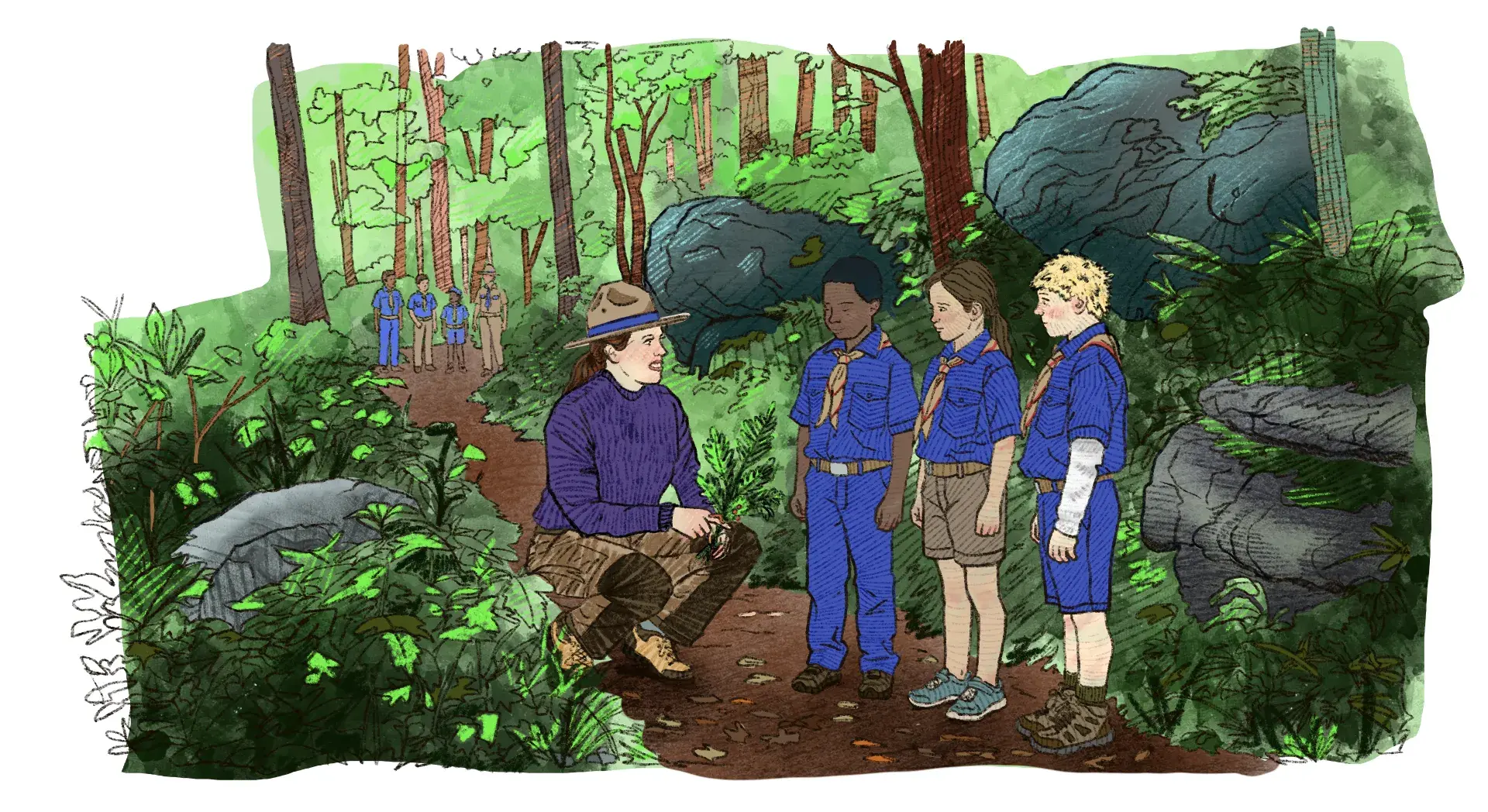
The story we tell about what just happened is how we absorb what we’ve learned. On The Pitt, residents present each case to the attending after their patient is discharged. They walk through what the patient came in with, the diagnoses they considered and ruled out, the call they made, and the result. It’s a small ritual with an outsized effect—the resident consolidates what they learned by teaching it, and everyone within earshot learns alongside them.
Reflection doesn’t have to be formal. Christopher Myers, a researcher at Johns Hopkins, studied medical transport teams—paramedics and nurses who fly in helicopters to accident scenes and rush patients back to the hospital. On any given day, they have no idea what they’ll encounter, and no single person can accumulate enough experience to be ready for all of it. What Myers found is that the crews built shared expertise through vicarious learning: telling each other stories, informally, between calls. These stories—casual, unscheduled, and recounted in whatever time they had—were how the whole team became more prepared together.
There are plenty of ways to build reflection into your work. The harder—and more interesting—work is building it into your culture.
Here are a few practices we use across IDEO to encourage reflective storytelling.
- Ask “What are you working on?” The deceptively simple five-word question is a reflective invitation dressed up as small talk. Ask it in hallways, on Slack, at the start of one-on-ones. Half the time people just answer. The other half, they tell you something they didn’t realize they’d learned.
- Never skip a retro: It’s easy to nix a project post-mortem when you’re running short of time. But “I liked…,” “I learned…,” “I lacked…,” and “I longed for…,” is an easy and effective feedback framework to prompt everyone to share their ah-has and takeaways from the work.
- Host a “Wrap Party”: Once a month, we host a virtual IDEO-wide “Wrap Party” where teams share three behind-the-scenes stories about recently completed work, giving everyone an opportunity to learn and get inspired together.
At one point while watching The Pitt, I said to my husband, “Wow, if I’d seen this when I was younger, I might have wanted to become a doctor.” (He gently reminded me that I have to avert my eyes every time I see blood.) Though what we see on screen may seem aspirational, none of the lessons The Pitt shares about teaching and learning on the job is exclusive to an emergency room. Observability, restraint, and storytelling are choices—small ones, mostly—that we can put into practice every day wherever we work. None of them require a shift change.
Curious about how to improve ways of working at your organization? Get in touch.