


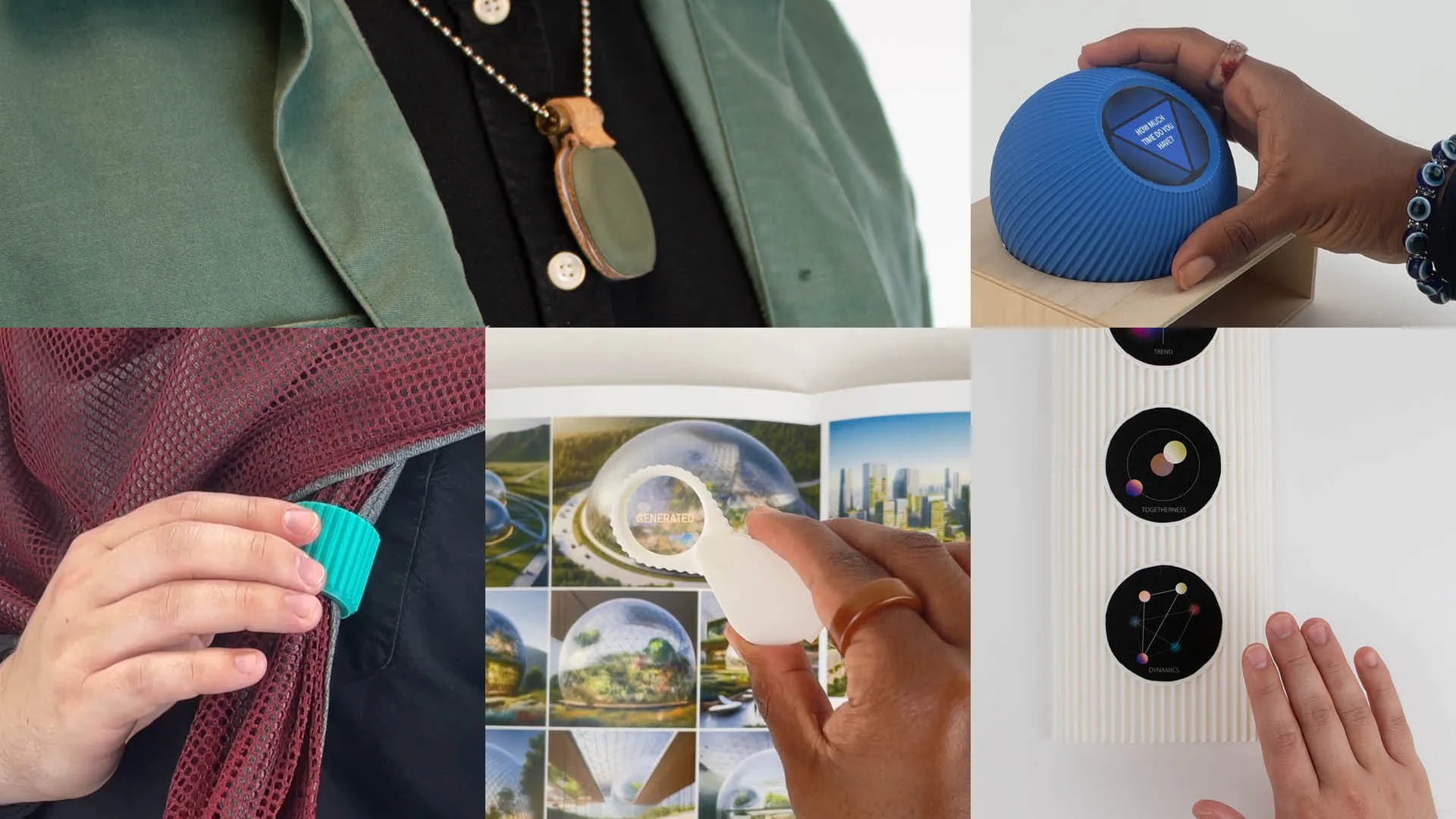
Some of these aren't words we hear a lot about AI, particularly not in online conversations. Instead, when we conducted an experiment to synthesize general sentiment about AI, trends, and emerging AI case studies, we found a mixed review.
Posts about the rabbit r1, HumaneAi pin, and other AI assistants offer enthusiasm, but also skepticism and concern. Popular technology Youtuber Marques Brownlee titled his review of the Humane Ai pin “The Worst Product I've Ever Reviewed... For Now.” But some commenters were really positive. One wrote, “If someone can make an AI OS that works like this rabbit r1 demo, there’s another empire waiting to be built.” On Character.ai’s TikTok account, people most frequently commented about feeling an obsessive love for the app, or even an addiction.
Different people have different needs and expectations, and the future of AI is not one-size-fits-all—or even custom in the way we understand it today. Instead, it will be defined by the proliferation of personalized, adaptive, and specialized solutions to a broad range of needs defined for each individual user. Today, users turn to AI assistants to explore, with an understanding that the outputs need to be reviewed with a critical eye. Widespread adoption of AI assistants in everyday life will require that users can have confidence in their output and actions.
To succeed, we believe these products will need to be five things—intuitive, social, trusted, multimodal, and nurturing.
With some inspiration from products we admire on the market, and signals about what’s coming, let's explore some early concept provocations for how each of these principles could make AI feel great to use and deliver on its promise—in the near-term and farther down the line.
Intuitive entry points
Technologies that rely on AI promise to streamline our lives, but the current AI landscape is overwhelming. From choosing the right tool for a task to learning how to properly prompt it, the barrier to entry can be daunting for casual consumers. AI is ripe for an evolution into truly intuitive modes of interaction that make it easy to use and accessible for everyone.
Near vision: An AI platform that bridges multiple AI providers and tools with an added layer of automation that picks the optimal toolset and flow for a user.
Products like Perplexity AI show early visions of this style of simplified entrypoint, by offering several large language models (LLM) as options in their search tools. Their focus on mapping sources of data allows users to further explore information, pointing to a future where the AI can take further steps within that data for the user.
Far vision: A product that serves as the conductor of an orchestra of specialized AI agents that work together to accomplish complex tasks on behalf of the user—with minimal prompting and no need for detailed instructions. It would have holistic platform integration through a dedicated app, Siri, Hey Google, text, phone, or email, and be able to do things like schedule vaccine appointments for the whole family.
Inspiration: Forethought, AI-first customer support service; Simplified, a specialized AI suite of marketing and collaboration tools; and Arc Max, an AI-powered web browser that seamlessly integrates LLMs and AI tools with the website browsing experience.