Every CEO we talk to is focused on the same thing: using AI to become more efficient.
We call this the "AI Dividend." The surplus of human bandwidth, creative energy, and organizational capacity that automation liberates. And right now, most leaders don't have a strategy to reinvest it.
The organizations that win in the coming decade will not be the ones that automated fastest. They will be the ones that invested the resulting AI Dividend most wisely, redirecting it toward the unmeasured frontier where human creativity, judgment, and sensibility still reign. The AI Dividend is not a bonus. It is the seed capital for a fundamentally different kind of organization.
01The efficiency trap

Art by Mark del Lima, with the help of OpenStudio, ChatGPT, and Gemini.
The instinct to automate is understandable. AI can now handle tasks that once consumed enormous human effort: synthesizing reports, managing logistics, coordinating schedules, and writing first drafts of code. Early adopters are seeing real gains. At Anthropic, they estimate that 90 percent of the code written to build Claude Code [will soon be written by Claude Code](#) itself. These numbers are not anomalies. They are signals.
But here's the trap: If every competitor achieves the same efficiencies—and they will—then efficiency alone produces no lasting advantage. When the marginal cost of execution approaches zero, what differentiates one offering from another? Not speed. Not cost. The real advantage comes from pairing the efficiency gains with investment in an innovation capacity.
The race to the bottom, where every product and service converges on the same AI-optimized median, isn't a hypothetical. It's already underway. Browse any social media feed, and you can see the first wave of it: AI-generated images, text, and video that looked novel six months ago, now blur into indistinguishable sameness. The term for this is "AI slop," and it will quickly become a problem for even the most well-intentioned companies.
> The smarter move is to think of efficiency not as the destination, but as the mechanism that creates room for something far more valuable.
Leaders who focus only on efficiency will find themselves competing on price in a market where price advantages evaporate almost overnight.
02The architecture problem

To understand why this moment matters, it helps to look at an earlier technological revolution.
When factories first electrified in the late 19th century, most owners simply swapped out the steam engine for an electric motor. They kept the same layout, the same belt-and-shaft system that transmitted power from a single central source to every machine on the floor. The factory was still designed around the constraint of steam. Everything had to be arranged near the power source, and the entire line ran at the same speed.
It took nearly 30 years for manufacturers to realize that the electric motor had [completely changed the game](#). With small individual motors, you could put power at the point of use. You could rearrange the factory around the flow of production, not the flow of energy. The resistance to change was immense. Plant managers had spent careers optimizing the belt-and-shaft system. But once the unit-drive factory emerged, productivity gains dwarfed anything the old architecture could deliver.
Today's knowledge-work organizations operate as modern belt-and-shaft factories architected not around value creation, but around the movement of information through large-scale enterprises. The layers of middle management, the endless meetings, the reporting structures, the approval chains—these are coordination mechanisms that evolved to solve a very specific problem.
This is where the AI Dividend becomes transformative. Sloan's vision can now be fully realized, and the resources that were once consumed by coordination and the organizational overhead of being big can now be redirected. The dividend is not just a few hours freed up on individual calendars. It is a structural surplus: the entire cost of managing complexity in ways that no longer require human intermediation.
03Where the dividend should go
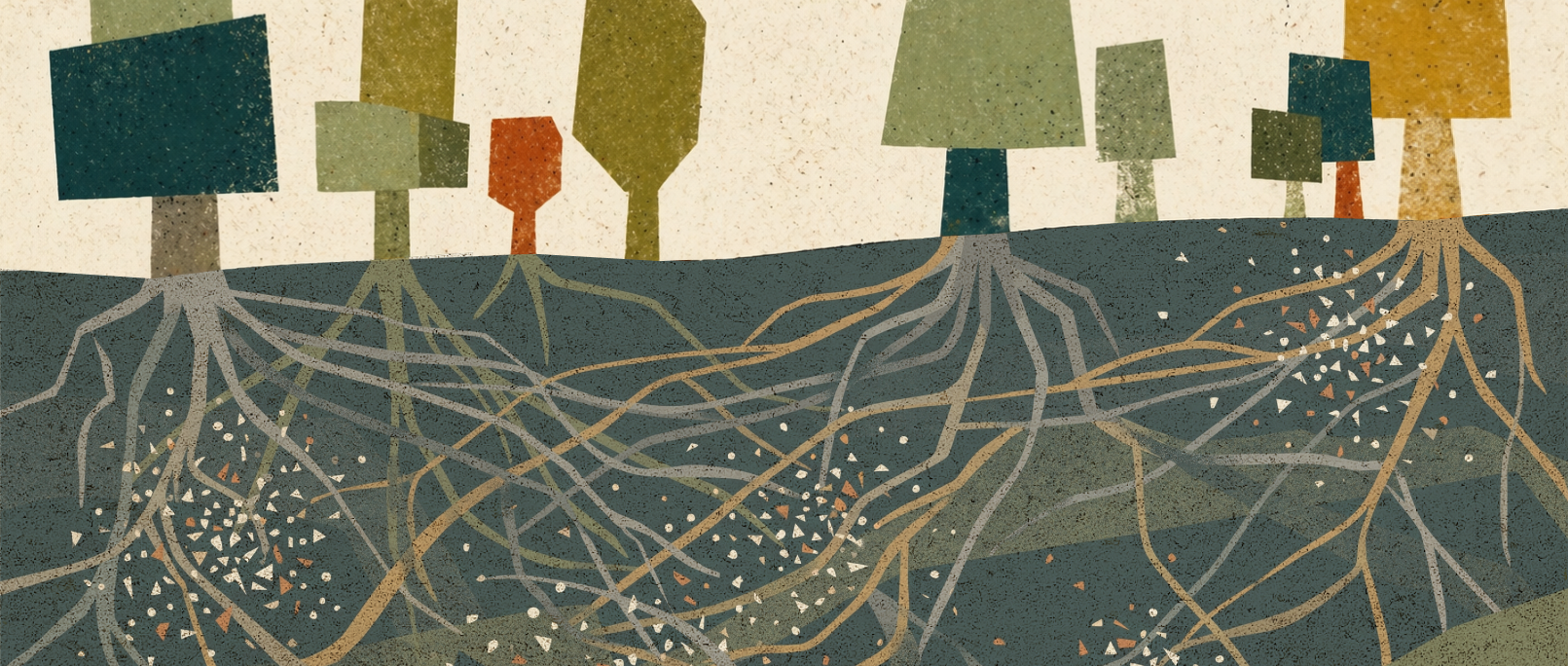
So, where should leaders invest this AI Dividend?
The answer is not "more of the same, faster." The AI Dividend should be invested in a new, more nimble and dynamic organization at the creative frontier: exploring the unmeasured territory where AI models cannot yet operate and where human sensibility, intuition, and judgment create genuine differentiation. We see two opportunities at the creative frontier: to make existing ideas better and to create fundamentally new ones.
When the Industrial Revolution flooded markets with cheap, uniform goods, the Arts and Crafts movement emerged in response. [William Morris](#), working in 1870s England, looked at the mass-produced kitsch pouring out of industrial production and saw an opportunity. He built a practice around the premise that quality, taste, and creative judgment could produce things that machines could not replicate and that people would pay a premium for.
And there is a deeper layer to what makes this frontier valuable. Less frequently, but more dramatically, there are times when operating at the creative frontier can lead to fundamentally new discoveries. Consider [Jackson Pollock](#). His drip paintings, created in the late 1940s, expressed fractal patterns with uncanny mathematical precision, decades before [Benoît Mandelbrot](#) described fractals as a formal mathematical concept. Pollock was operating in the territory between tacit knowledge and the unknown, sensing patterns that had not yet been codified and expressing them through a medium that had no algorithmic equivalent.
04A new architecture for productivity
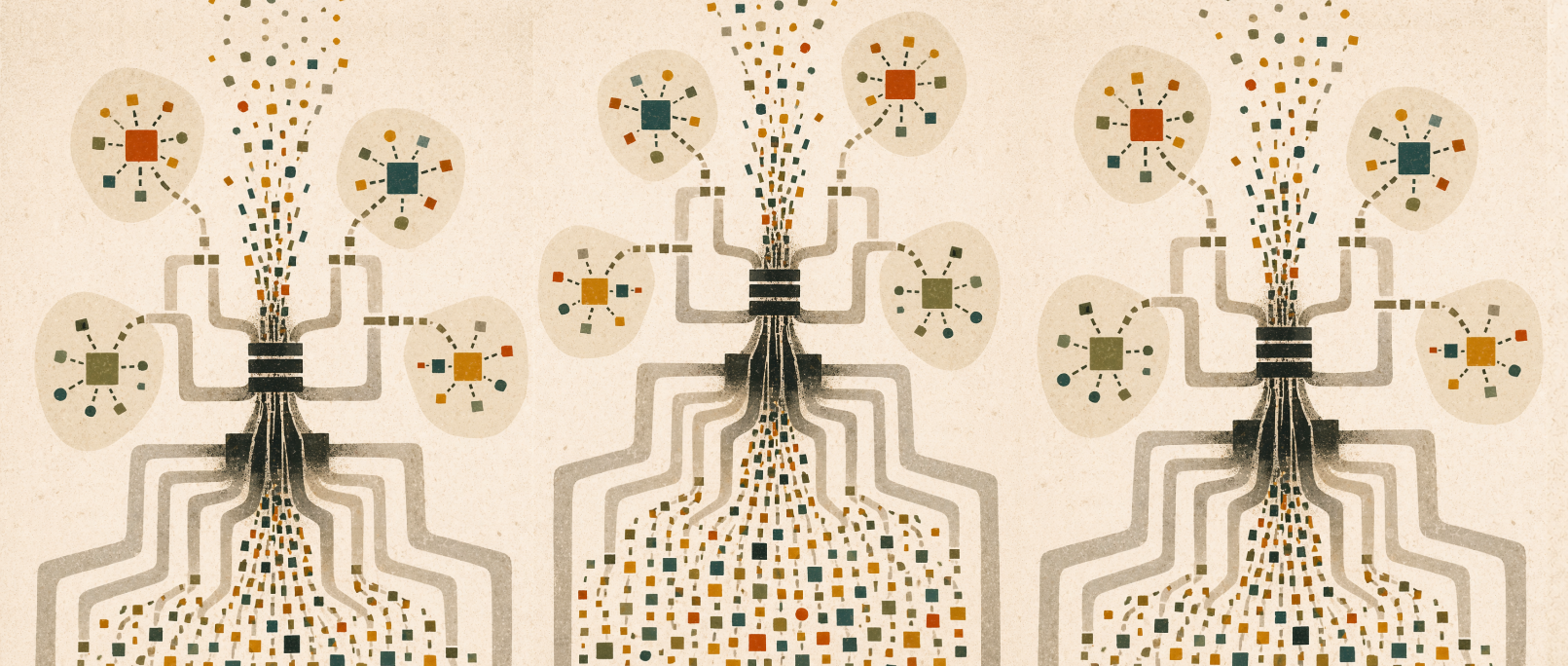
Investing in the creative frontier is not simply a matter of telling people to be more creative. It requires building the organizational architecture that enables creativity and learning to be productive at scale. This is what we call the "Adaptive Organization."
An Adaptive Organization integrates both efficiency and innovation, optimizing around change rather than stability or consistency. It operates through small, highly autonomous teams that are maximally interconnected without hierarchical constraints, enabling fast parallel execution. Unlike traditional organizations built for predictable environments, it treats adaptability itself as the core competency—measured not by efficiency alone, but by the speed and capacity to evolve.
The blueprint for the Adaptive Organization is still being defined, but three early principles stand out:
### 01Build smaller, more autonomous teams
The most productive organizations we observe today are not large hierarchies pursuing one strategy at a time. They are networks of small groups that operate with high autonomy and minimal coordination overhead. AI handles the connective tissue that used to require middle management: information sharing, resource allocation, and progress tracking. What remains is a team small enough to trust one another, move quickly, and take creative risks.
### 02Increase speed by operating in parallel
Legacy organizations often pursue one big bet at a time because their coordination costs make parallel activity prohibitively expensive. When AI absorbs those costs, you can run thousands of experiments simultaneously and execute the most promising strategies far more efficiently. In biological terms, it is the difference between a species that produces one offspring and bets everything on its survival and one that sends a thousand seeds into the wind.
### 03Develop the creative capacity to translate the unknown into difference
This means investing in people and practices that operate at the frontier: people with curiosity, creative confidence, a bias to action, and a willingness to challenge dogma. Their job is not to optimize the known, but to sense what is coming next. It means building an organization that values judgment and taste, not as luxuries, but as the core capabilities that distinguish a premium offering from a commodity.
05The compounding effect

Here is what makes the AI Dividend argument urgent rather than merely interesting: the dividend compounds.
When you invest freed-up capacity in the Adaptive Organization, you generate new insights and new possibilities. Those insights, fed back through AI-enabled systems, create new efficiencies and new capabilities, which free up more capacity, which you can invest in more exploration. It's a flywheel.
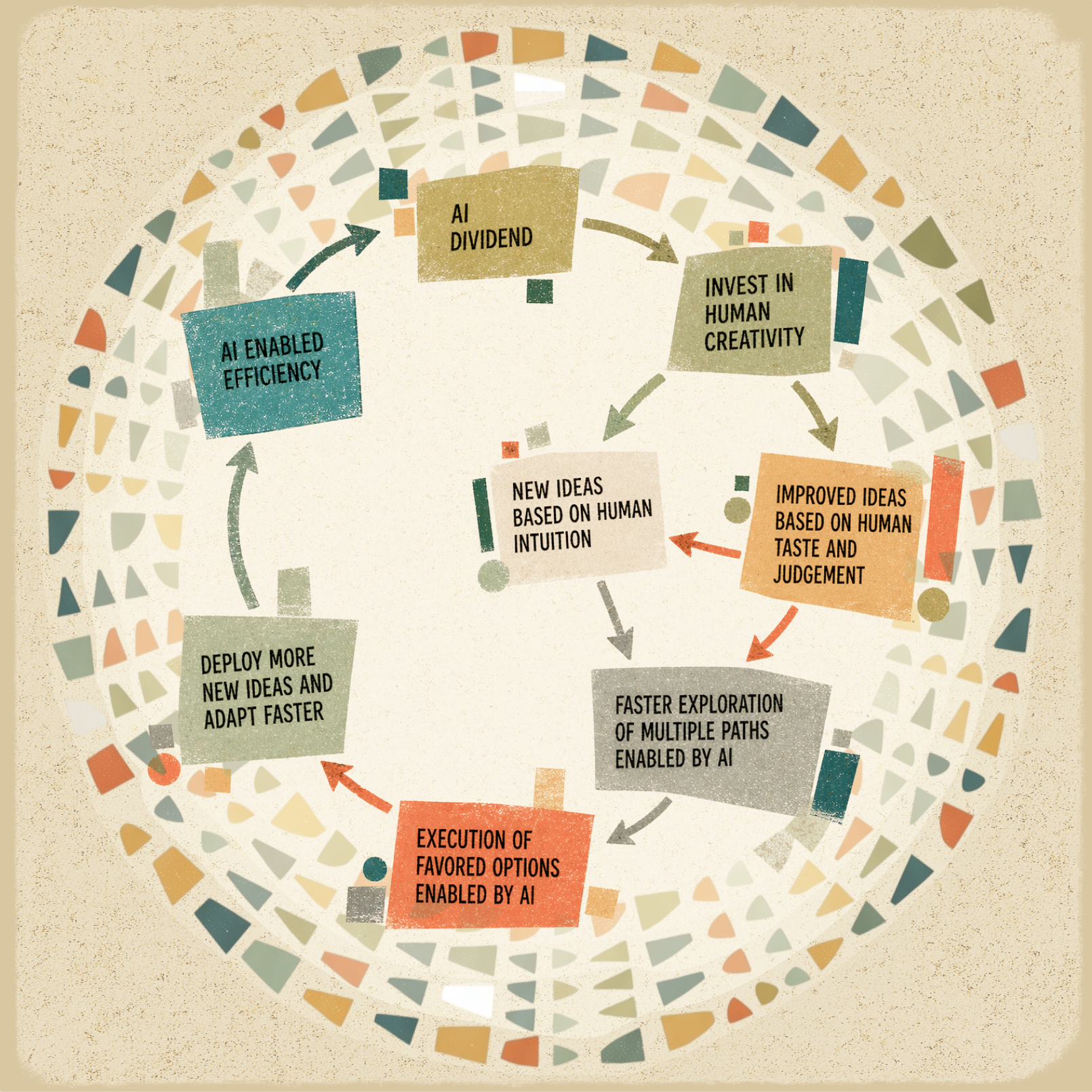
The Adaptive Organization flywheel — efficiency, dividend, and creative reinvestment.
Think of it this way. A company that uses AI only for efficiency is like someone who loses weight but never exercises. They are thinner, but not fitter. The company that invests the dividend in creative capacity is like someone who loses weight, feels more energy, starts exercising, builds strength, and finds they can do things they never could before. The fitness compounds.
> The gap between early investors and late adopters will not be linear. It will be exponential.
06The gardener's mindset

None of this can be commanded into existence. You cannot mandate creativity. You cannot engineer emergence. And this is where leadership itself must change.
The leader of a belt-and-shaft factory was, appropriately, an engineer. The leader of a dividend-investing, Adaptive Organization is more like a gardener. The gardener does not make the plants grow. The gardener creates the conditions in which growth happens: the right soil, the right light, the right spacing, the right pruning. The gardener sets boundaries and provides resources. And then the gardener gets out of the way.
The instinct of most leaders under pressure is to tighten control, to demand predictability, to optimize harder. That instinct is perfectly suited to the belt-and-shaft factory. It is lethal in an environment where the competitive advantage comes from adaptation, from sensing and responding to changes faster than the world throws them at you.
The average lifespan of a Fortune 500 company has been declining for decades. Not because these companies got worse at what they do, but because the environment around them changed faster than they could adapt to. AI has the potential to reverse that trend, but only if leaders use it to increase their adaptive capacity, not just their operational efficiency.
The dividend is real. It is already accumulating.
The door to the new economy is open. Are you willing to step through it?
You can find more of Tim and Joe's explorations of the future at [theoasis.press](#).


 Thinking