


Take a look at ChatGPT or other generative AI systems, and you’ll notice they look a lot like a Google search bar.
We’re still in the awkward, early phases of AI, where the technology is so new, the only way people have figured out how to interact with it is a way they’re already familiar with—even if it doesn’t make the most of the new technology. (ChatGPT itself admits its interface wasn’t designed with users in mind.)

Given where we are in the evolution of the technology, we decided to imagine new models for how we would want to interact with A.I. We borrowed a little inspiration from the Joaquin Phoenix movie Her, about a man who falls in love with the operating system in his phone, and the concept of calm technology, which is unobtrusive and embedded in our everyday lives, to come up with seven ideas for AI interaction paradigms we’d like to see in the world. There was only one rule: no chatbots. (Spoiler: We broke the rule.)
Here’s what we came up with.
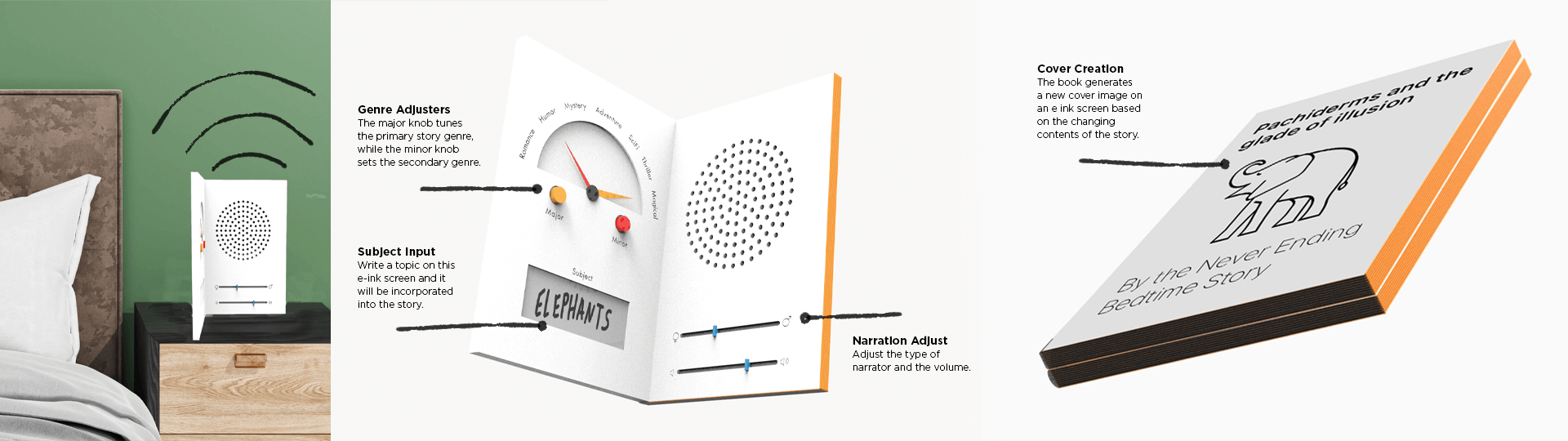
1. Neverending Story Book: AI-generated bedtime stories
This hardware device uses generative AI to always tell a new tale—and one that users can help shape. While some inputs are constrained, like the genre knobs, the subject matter open input box can accommodate as much creativity as the user can produce. This combination of constrained and flexible inputs provides guardrails for how users are meant to interact with the device, and by extension generative AI.
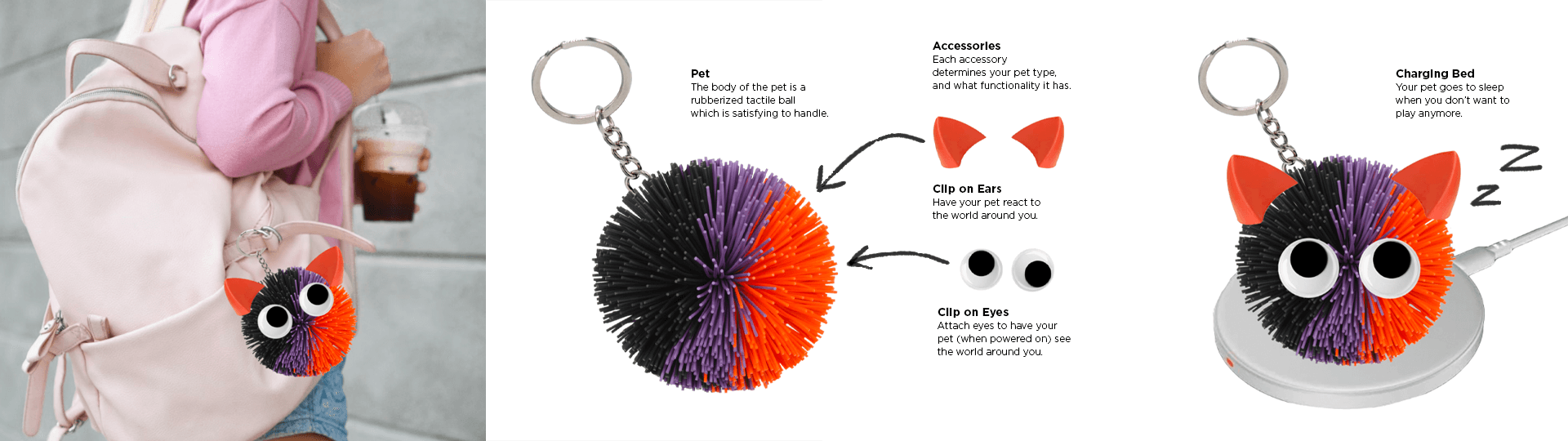
2. Tamaglitchi: An AI pet, embodied
It’s about time somebody made a pet with an off button. Tamaglitchi uses models trained on thousands of hours of dog and cat noises, behaviors, and interactions with humans to create an experience that is so close to having an actual pet, your parents can’t say no. (A prototype to meow at, via Character.AI.)
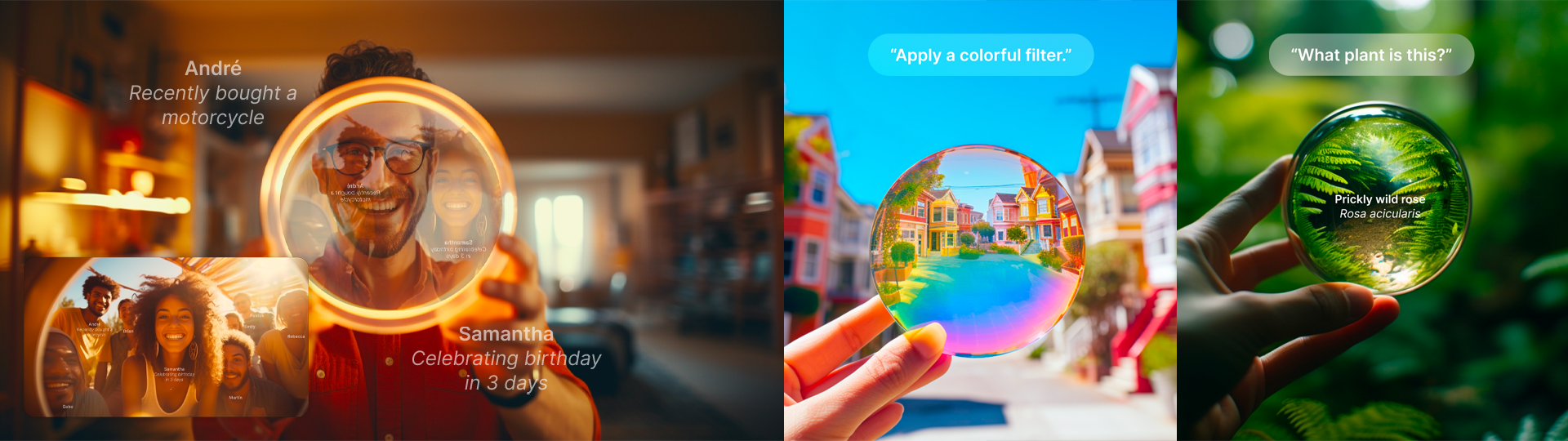
3. Portals: Handheld, AI-enabled circular lens that enhances connections
With so many devices that command our attention and pull us away from our physical environment, Portals are windows that allow us to refocus on the people in our lives and the natural world. Leaning into the passthrough quality of augmented reality, Portals allow users to capture memories and style inspiration in real time with minimal disruption to their field-of-view. Using machine learning models, Portals provide users with valuable social nudges and additional context to objects, people, and places in their environment.