The most powerful technologies disappear into the background. They feel less like devices to operate and more like rooms to inhabit.
AI is the new electricity — pervasive, invisible, and transforming everything it touches. But its arrival in our homes, vehicles, and pockets has so far been the opposite of calm. Notifications stack. Assistants interrupt. Dashboards multiply. The cognitive overhead grows even as the underlying systems get smarter.
Calm Technology — a set of design principles that emerged from research at Xerox PARC in the 1990s — argues for an alternative. Instead of pulling our attention to the center, the best digital systems sit at the periphery, supporting our actions without demanding them. In an age of AI, that older idea has become newly urgent.
> The goal is to create tools that work so naturally with our hands and bodies that they require minimal cognitive overhead.
01Ever wonder why some products feel familiar while others stress us out?

There's a quiet test you can run on any device or interface: how much of your attention does it ask for, and how much does it deserve? A toaster doesn't compete for attention; it just does its job. A smartphone, by contrast, is engineered to interrupt — and once we live with enough interrupting devices, the steady hum becomes invisible to us, even as it grinds at our nervous systems.
Calm Technology is the principle that a tool's value is in inverse proportion to how much it asks of us. The interfaces that feel best are the ones that fit into the rhythm of life rather than competing with it.
02The disappearing interface misconception
It is tempting to assume calm means invisible — that the goal is a screenless, voice-only world where computing fades to nothing. That isn't quite right. Many "invisible" interfaces are actually worse: when you can't see what a system is doing, you can't trust it, and you can't repair it when it goes wrong.
The better target is what we might call a "pass-through" design — tangible, legible, but unobtrusive. The technology is present enough to be understood, and quiet enough that it doesn't announce itself.
03AI as better roommate
Most AI products today behave like a new flatmate who never stops talking — eager, well-meaning, exhausting. The better model is the roommate who notices what you're working on, hands you the cup of coffee you didn't ask for, and otherwise leaves you alone.
Designing for that sensibility means asking when an AI should speak at all — and recognizing that silence, attention, and restraint are products of design too.
04The non-interaction interaction
The most useful moments with technology are often the ones where there is no explicit interaction at all. The thermostat that simply learns your patterns. The phone that quiets itself when you're asleep. The door that unlocks because you, recognizably, are the one approaching.
These are interactions in the design sense — the system is reading and responding — but the user is freed from operating them. That asymmetry is where calm lives.
05Everyday ambient intelligence
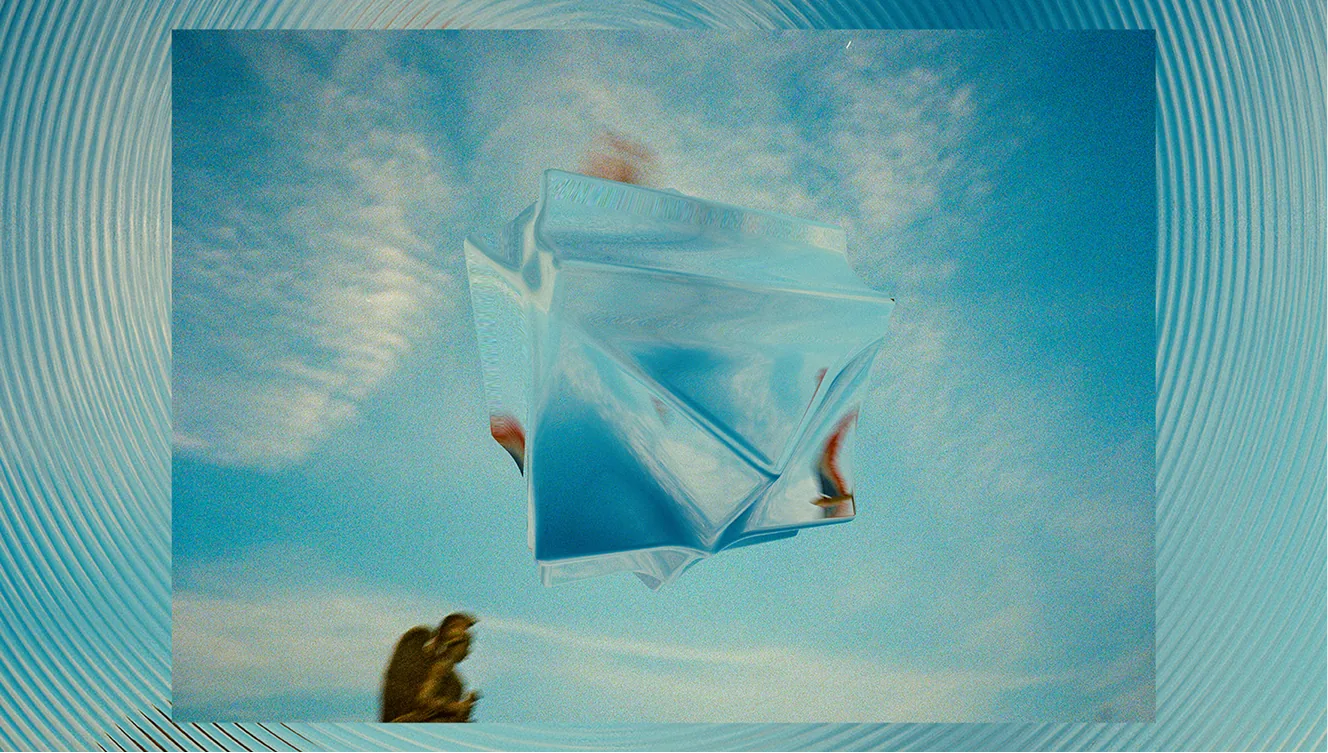
Ambient intelligence already lives in our houses, just unevenly distributed. Smoke alarms, automatic lights, hot-water systems that turn themselves down at night — none of these advertise themselves as "AI," and that's part of why they work.
The most valuable AI systems of the next decade will follow that pattern. They will be ambient enough that we forget they're there, and intelligent enough to be missed when they're not.
06The emotional spectrum of technology
Every product sits somewhere on a spectrum from calming to agitating. Where it lands is rarely accidental — it's the cumulative result of dozens of decisions about default settings, notification frequency, animation speed, language, color, sound.
Designing on the calm end of that spectrum is harder. It requires saying no to features that would otherwise demand attention, and trusting that absence can itself be a feature.
07The disconnection paradox
More technology has not made us feel more connected. The more our devices try to surface the lives of others, the more isolated we tend to feel. It is a strange paradox, and one that calm technology takes seriously.
Sometimes the most connecting thing a system can do is leave room for what's actually in front of you — the conversation in the kitchen, the body in the room, the weather outside the window.
08Designing for the periphery
Designing for calm is, in the end, designing for the periphery — the edge of attention rather than the center. It demands a different kind of restraint from the people building products: a willingness to optimize for what the user is doing, not for the user's engagement with the product itself.
Technology so well-designed they become extensions of the environment itself, leaving us free to focus on their actual goals. That's the brief, and it's never been more relevant than now.
Amber Case is a designer and researcher leading the [Calm Tech Institute](#).


 Edges
Edges